Designing conversational AI across the entire B2B SaaS customer lifecycle.
Across three squads at Blip, one thread: a single conversational layer running the length of the B2B funnel. R$15M+ in attributed revenue at acquisition, faster activation at onboarding, and first response cut from 68 to 11 minutes at support. I designed it across the Marketing, Growth, and CX teams, with onboarding and support both sitting inside CX; this case brings those projects together.
The role
Conversational product design across acquisition, onboarding, and support/retention, partnering with Growth, Onboarding, and CX.
The arc
The industry-wide shift, in one case: from rule-based conversational design at the top to generative AI (GPT-3.5) at the bottom.
The impact
R$15M+ revenue and 48.8% YoY growth at acquisition; 68 → 11 min first response and R$90,200 saved in support; converged into one in-product copilot.
| Lifecycle stage | Problem I was solving | Headline outcome |
|---|---|---|
| Acquire, top of funnel | Paid-media dependence, form drop-off, slow follow-up | R$15M+ revenue · 48.8% YoY PaaS · 23% lower CAC · leads close 3.62× more |
| Onboard, new-client activation | Slow time-to-first-value, an early churn signal | Communication cadence engineered to accelerate each client's first win |
| Support / Retain, bottom of funnel | 68-min first response, repetitive tickets, low CSAT | 68 → 11 min · R$90,200 saved · +24% CSAT |
| Convergence | Onboarding and support in separate places | Unified in-product copilot: ask AI, escalate to a human |
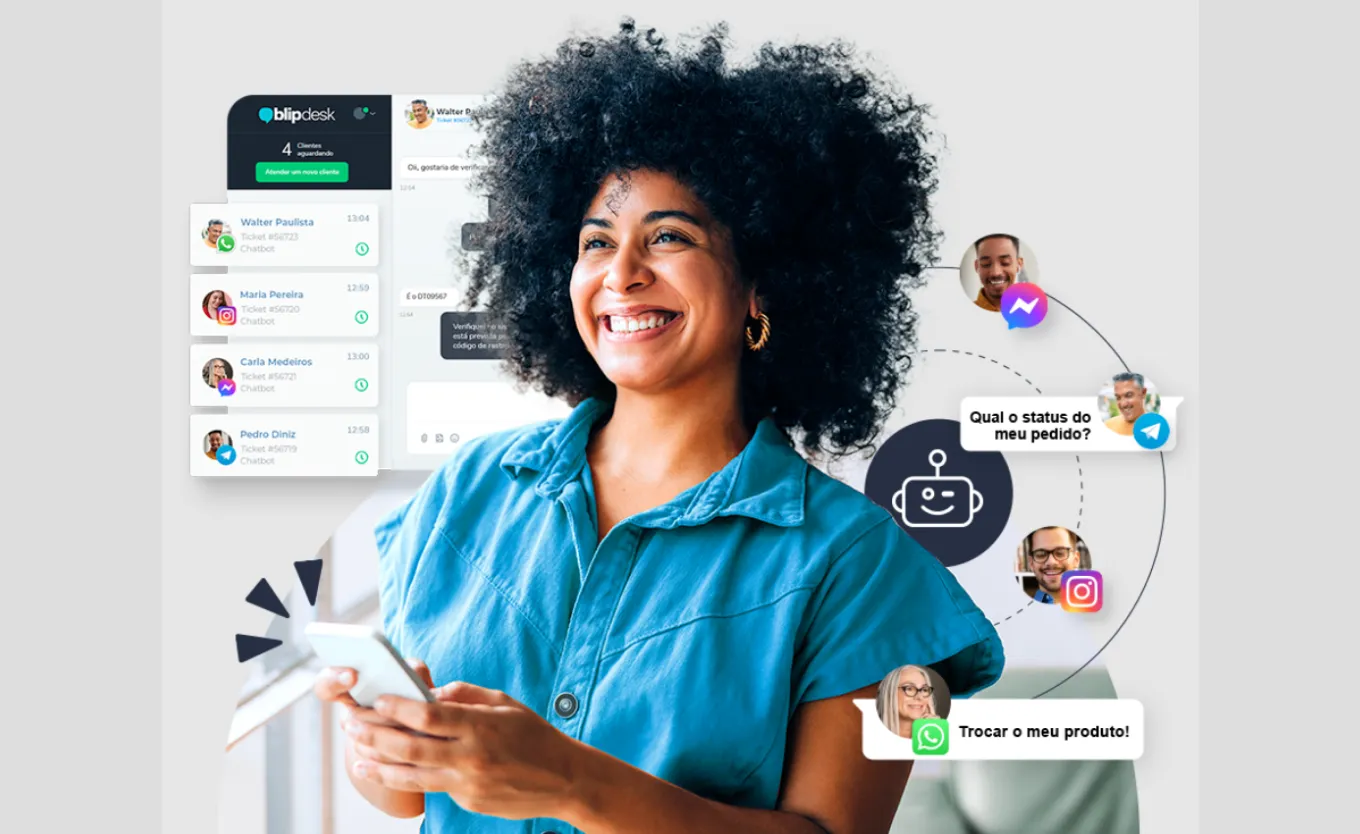
Three jobs in one customer lifecycle
Blip is a LATAM-leading conversational-AI platform (B2B SaaS) running automated and human conversations across WhatsApp, Instagram, Facebook Messenger, Google Business Messages, and web. As an internal product designer I owned conversational product design for three different jobs in the customer lifecycle, with onboarding and support handled in parallel. Not one feature in one corner of one product, but acquisition, activation, and retention, each with its own users, metrics, and cross-functional partners.
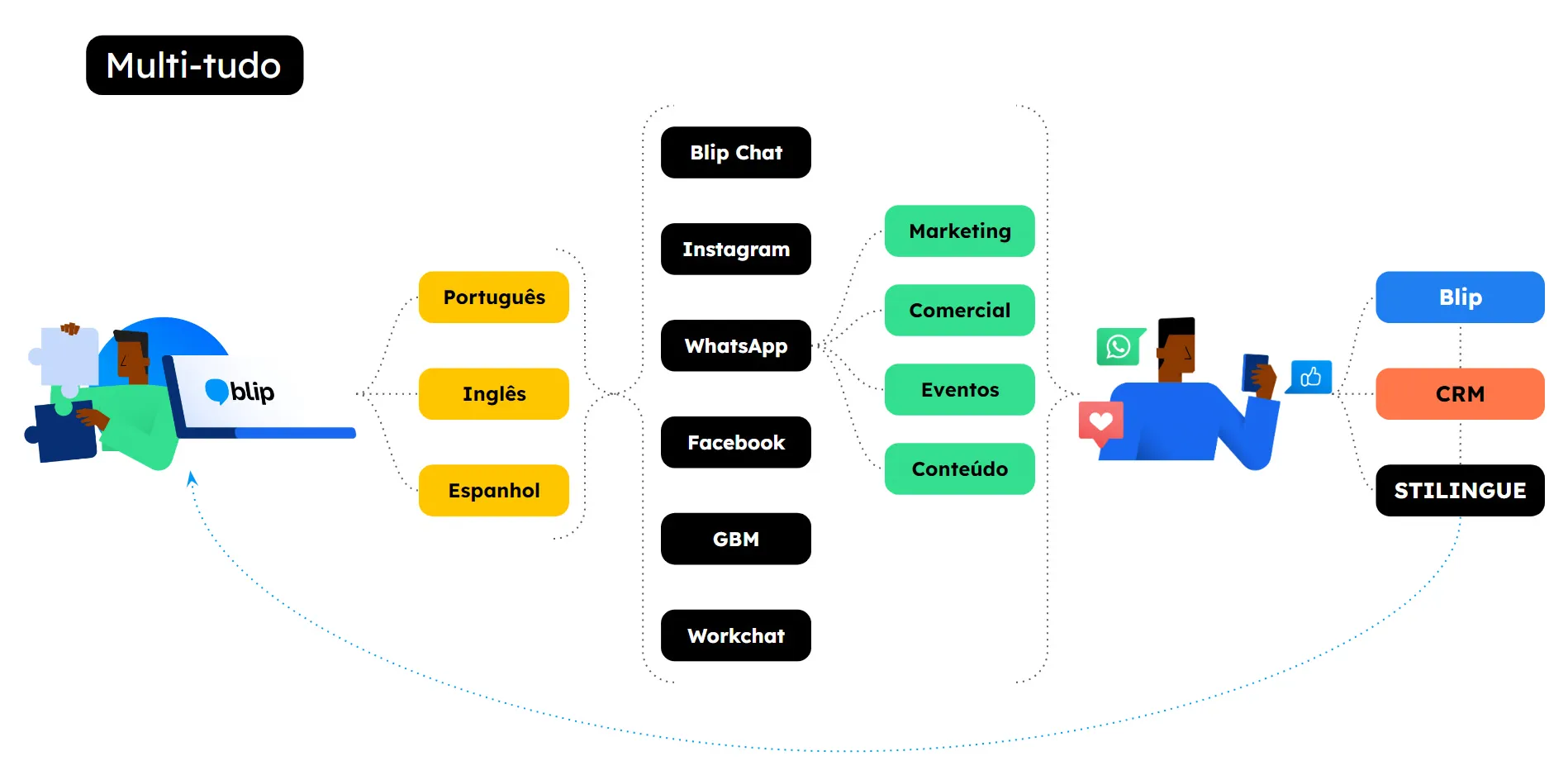
My role across the three efforts:
- Led discovery: stakeholder interviews, support-team shadowing, usability tests, journey mapping, affinity mapping.
- Designed macro architecture (flows, API touchpoints, business rules, error and exception handling) and micro conversational design (components and phrasing in Blip's tone of voice).
- Mapped and curated the knowledge bases behind the AI layer; partnered with engineering on an API to keep them current.
- Defined and tracked success metrics per stage; ran validation and A/B tests.
Leads arrive through messaging and move through Blip's qualification stages until a few convert to new clients. My role: help Growth qualify more leads and cut no-shows before the sales calls that close the deal.
Past the handoff, everyone is already a client — so this is a line, not a funnel. The job is getting each one to their first chatbot live fast, then preventing churn with efficient support.
Why this is one case, not three
On paper they had different owners and different metrics. In practice they were one story: the same funnel underperformed at every stage, and the same asset could fix it. The top depended on paid media and static forms that dropped users; the middle was slow to get new clients to their first win; the bottom was slow, expensive, and human-bound on repetitive work.
So the decision that runs through everything: don't ship three point solutions, design one coherent conversational layer (omnichannel, CRM-synced) and adapt it to each stage's job. That reframing is what let a single working method pay off three times, and it's why onboarding and support could later collapse into one in-product surface.
Replacing the form with a conversation
Marketing paid for the clicks; the static form lost most of them, and the few leads that made it through reached Sales slow and cold.
Key decisions and tradeoffs (my calls):
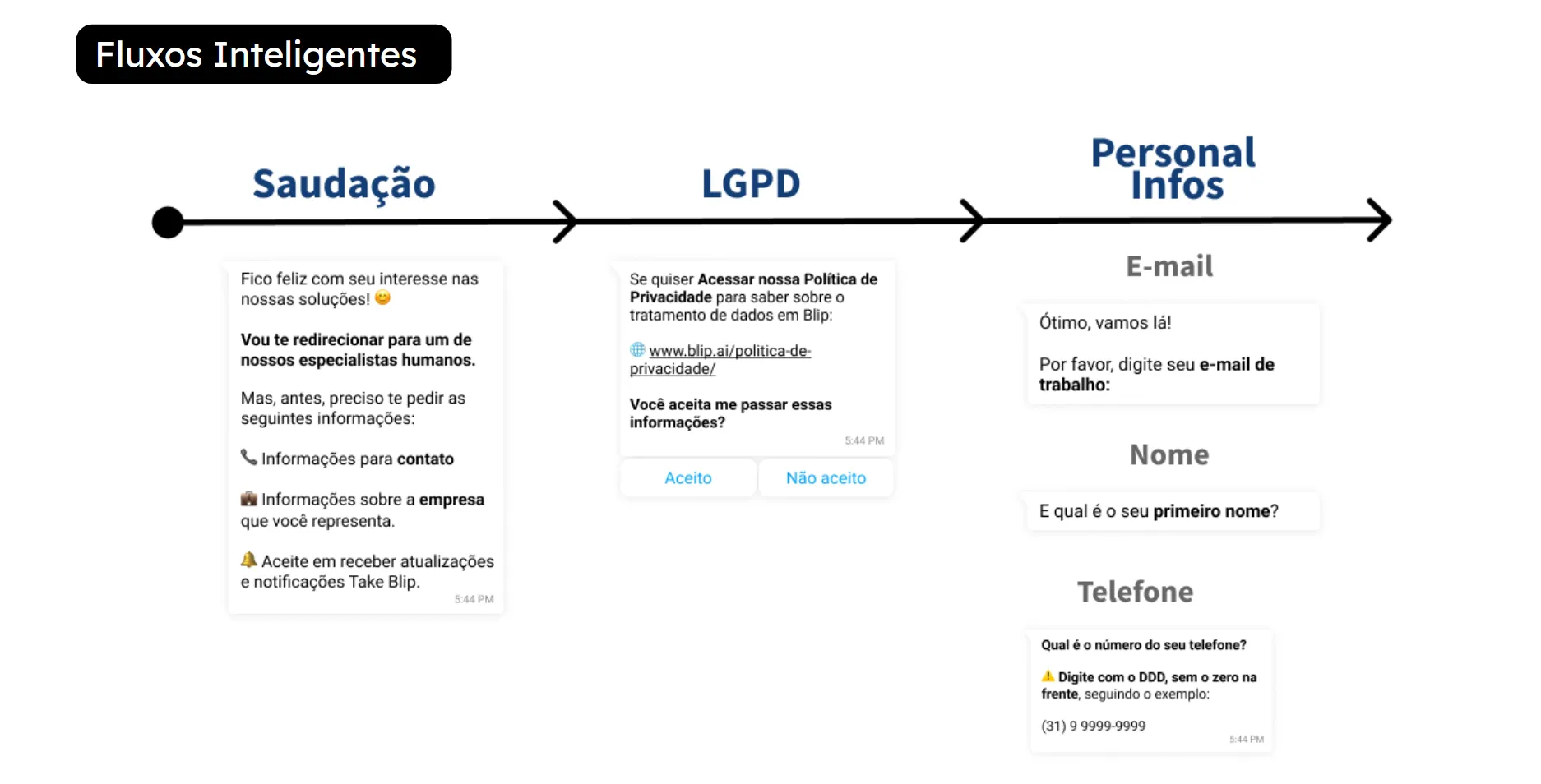
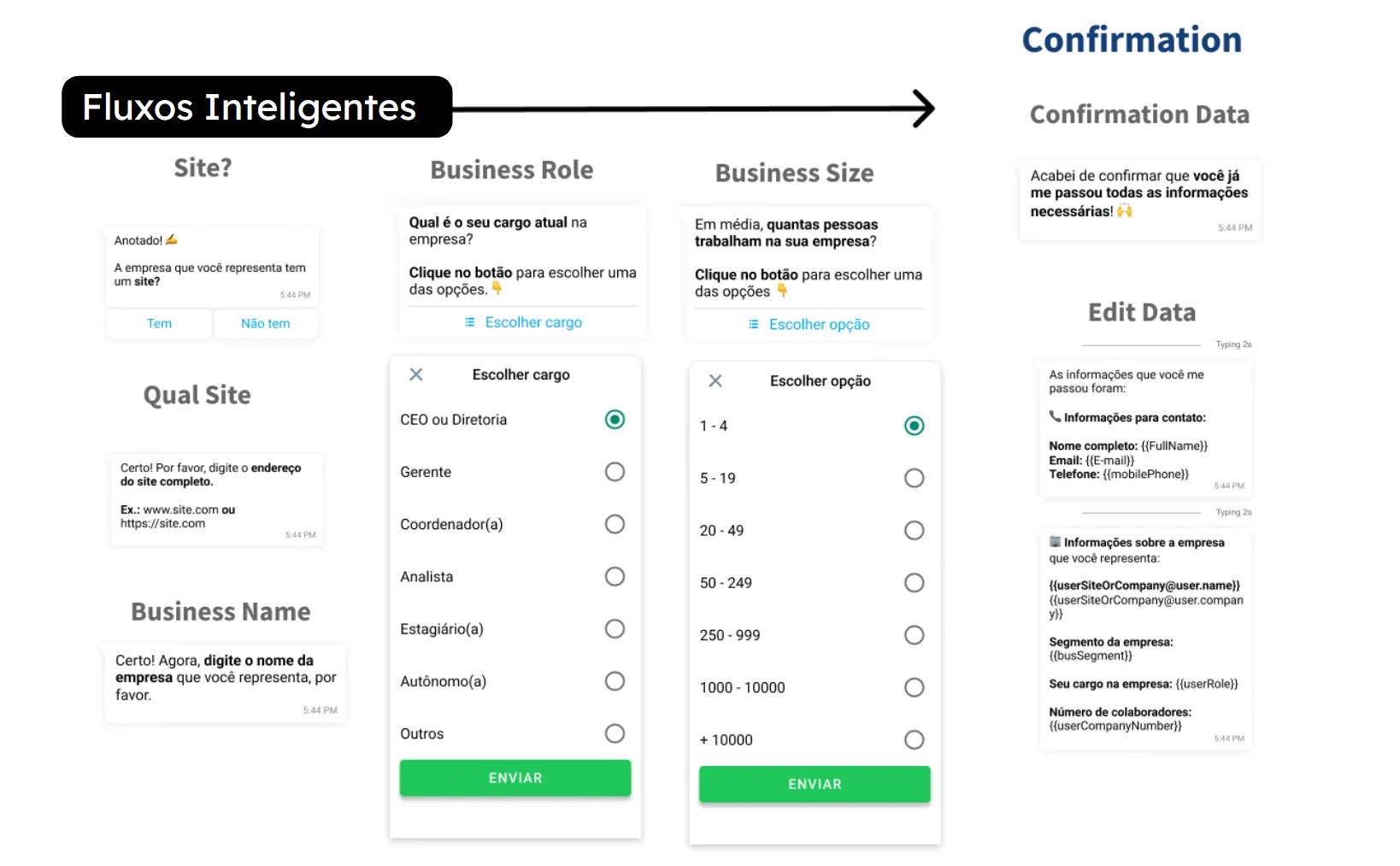
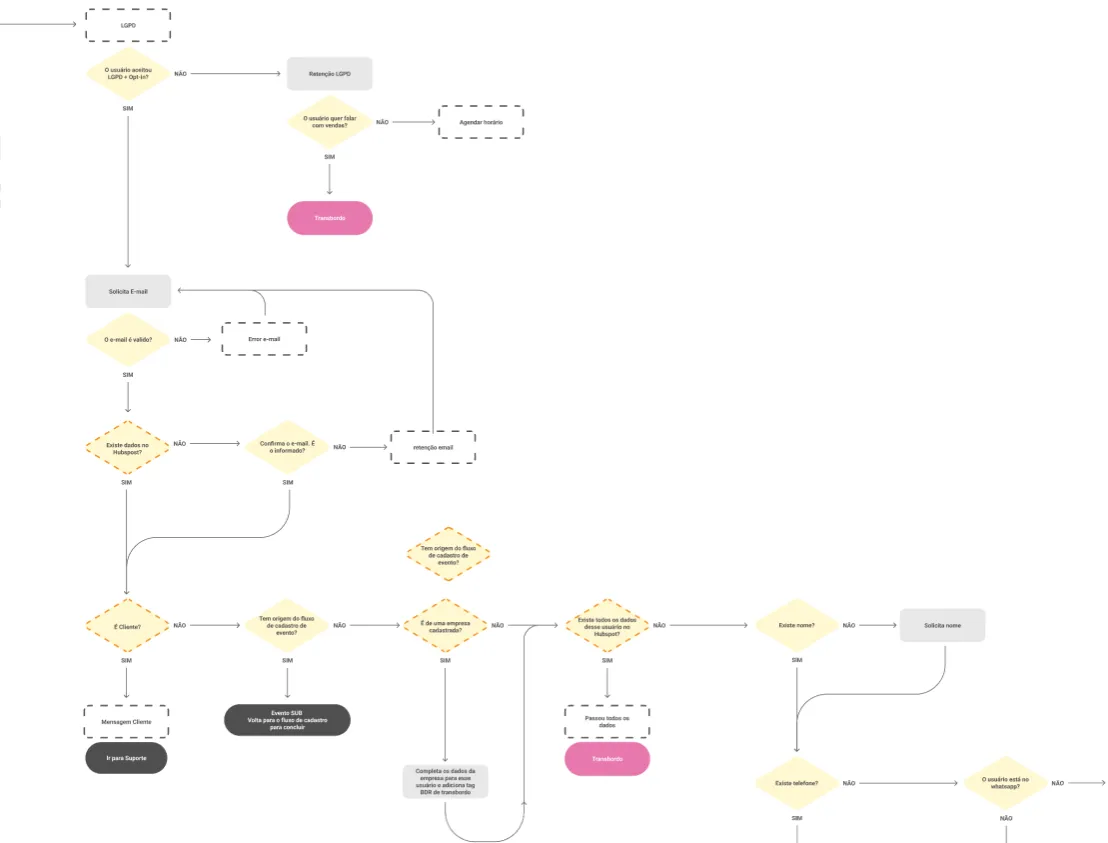
- Replaced static forms with an interactive conversational agent, live on the website and across WhatsApp, Instagram, and Facebook, qualifying leads in-channel and syncing straight to the HubSpot sales pipeline, removing the form as the point of failure.
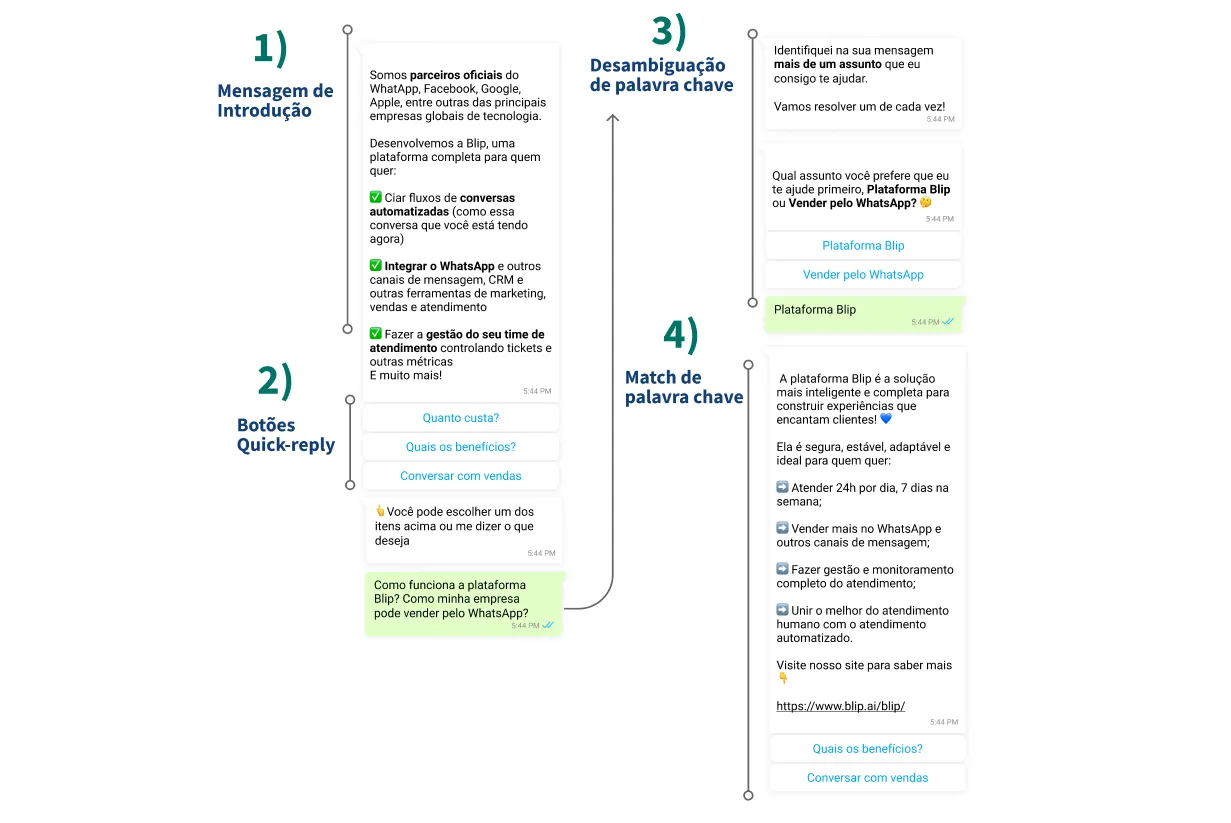
- Designed a rule-based flow with keyword disambiguation and NLU routing. At this stage the intelligence was conversational-design intelligence (intent matching, branch logic, graceful error handling), not a generative model. That foundation is what the generative layer later plugged into downstream.
- Chose native channel components (quick-reply, list-picker) over plain-text menus, given LATAM adoption, for fewer input errors and higher completion.
- Prioritized with an impact × effort matrix, deliberately deprioritizing heavier bets (e.g. gamification) to ship the automated conversational experience, multichannel lead collection, and an active-notification recovery pipeline first.
- Built a component-conversion script with engineering so one flow authored for WhatsApp auto-publishes to the other channels, true omnichannel parity where every change syncs automatically instead of being rebuilt per channel.
Before designing, I benchmarked how competitors used messaging to acquire and qualify leads. The gaps, especially that no one used their own product across three messaging channels, became the opportunity.
| Feature | Manychat | Zenvia | Intercom | Zendesk | Sprinkler | Blip | |
|---|---|---|---|---|---|---|---|
| ★ | Tutorial on lead-gen & ROI | ||||||
| Live human chat | |||||||
| ◆ | Contact-sales form via webchat | ||||||
| ◆ | Articles > landing page | ||||||
| ◆ | Video tutorials | ||||||
| Quiz | |||||||
| ★ | Product tour / demo | ||||||
| Get help & support | |||||||
| FAQ | |||||||
| ★ | Free templates | ||||||
| Newsletter opt-in | |||||||
| ◆ | Recover conversation history | ||||||
| ★ | Channels | multi + WhatsApp | web | web | web | WhatsApp + web |
- ★ 2/5 provide specific tutorials on conversational marketing.
- ★ 2/5 display a small in-chat product tutorial.
- ★ 0/5 use their own product to acquire customers across three messaging channels. The whitespace.
The conversational architecture
The numbers
From first touch to closed revenue: how far the acquisition agent reached, how deeply people engaged, how many became sales-ready leads, and the revenue and efficiency that followed, with each metric spelled out beneath its number.
Lead time, SAL to won
6 days faster from SAL to won.
The conversational agent became a key acquisition asset: R$15M+ attributed revenue, 48.8% YoY PaaS growth, 23% lower CAC, leads closing 3.62× more than inbound.
The connective tissue, get each client to their first win
New B2B clients took too long to reach their first real outcome, and slow time-to-first-value is an early churn signal. Not a big flow; a focused, high-leverage intervention: get each new client to their first win fast.
Key decisions and tradeoffs (my calls):
- Designed the new-client communication cadence around one goal: accelerate the client's first win (first chatbot live, core platform learned), not a generic feature tour.
- Sequenced the messaging by value, not by feature list, so each touch moved the client toward activation and cut early drop-off.
- Built it to hand off naturally to the support/AI layer when a client got stuck, which is what later made the onboarding + support convergence possible.
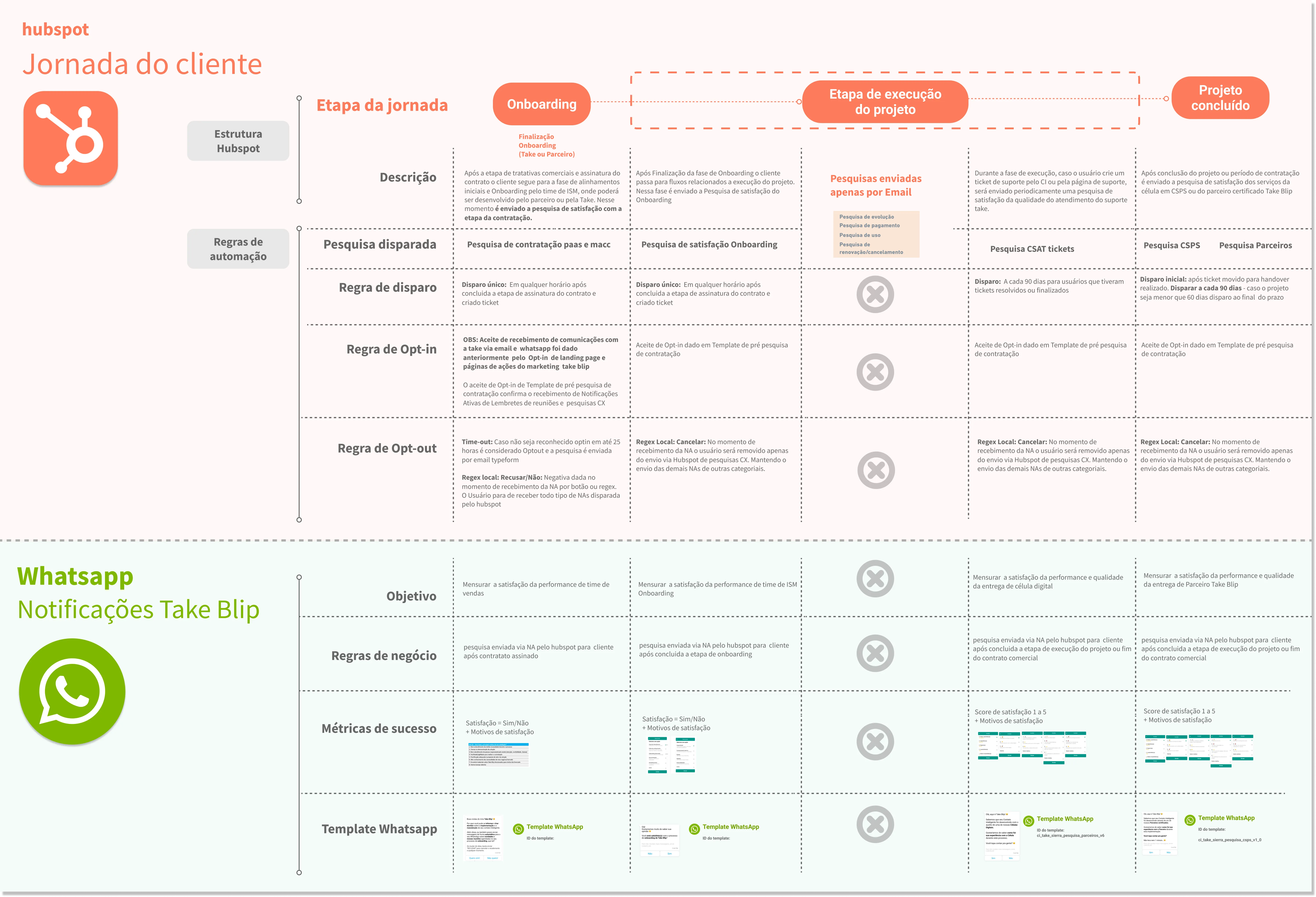
Read it as evidence of orchestration across systems (HubSpot × WhatsApp), not for cell-by-cell detail, a program of rules, not a screen. Every touch is sequenced to pull a new client toward their first live chatbot before the drop-off that precedes churn, and to hand off cleanly to the support layer when they stall, the seam that later let onboarding and support collapse into one copilot.
My first work at Blip was embedded in a fintech key account, before the platform's current AI era (static, pre-GPT conversational design). The lasting value wasn't a screen, it was facilitating a full Lean Inception workshop with the client's stakeholders and my team, defining the roadmap and producing the MVP for their chatbot. That habit, stakeholder alignment and strategic framing before pixels, is the lens I brought into the lifecycle work above.
Where generative AI entered the stack
Support is where the work crossed from rule-based conversational design into generative AI. I designed a GPT-3.5 layer to resolve common technical queries and create tickets, plus an AI agent-assist that summarizes incoming tickets so humans resolve faster. This pillar proves the generative half of the arc: grounded, bounded, and shipped, not a demo.
Customers faced roughly 68-minute first responses, no real-time human contact, and expert agents drained by repetitive, low-complexity queries: high cost, low CSAT. Many users didn't even know they could open tickets via WhatsApp.
Key decisions and tradeoffs (my calls):
- Automate the repetitive, augment the human: a GPT-3.5 layer resolving common queries and creating tickets, and an agent-assist summarizing tickets for faster human resolution.
- Grounded the AI on curated knowledge (official Help Center articles plus agent-consolidated solutions) and partnered with engineering on an API that auto-updates the knowledge base, since articles change constantly and manual rework wouldn't scale. This grounding and human-in-the-loop design is the "AI with judgment" work: what the model may answer, where it falls back and escalates to a human, and how tone stays on-brand.
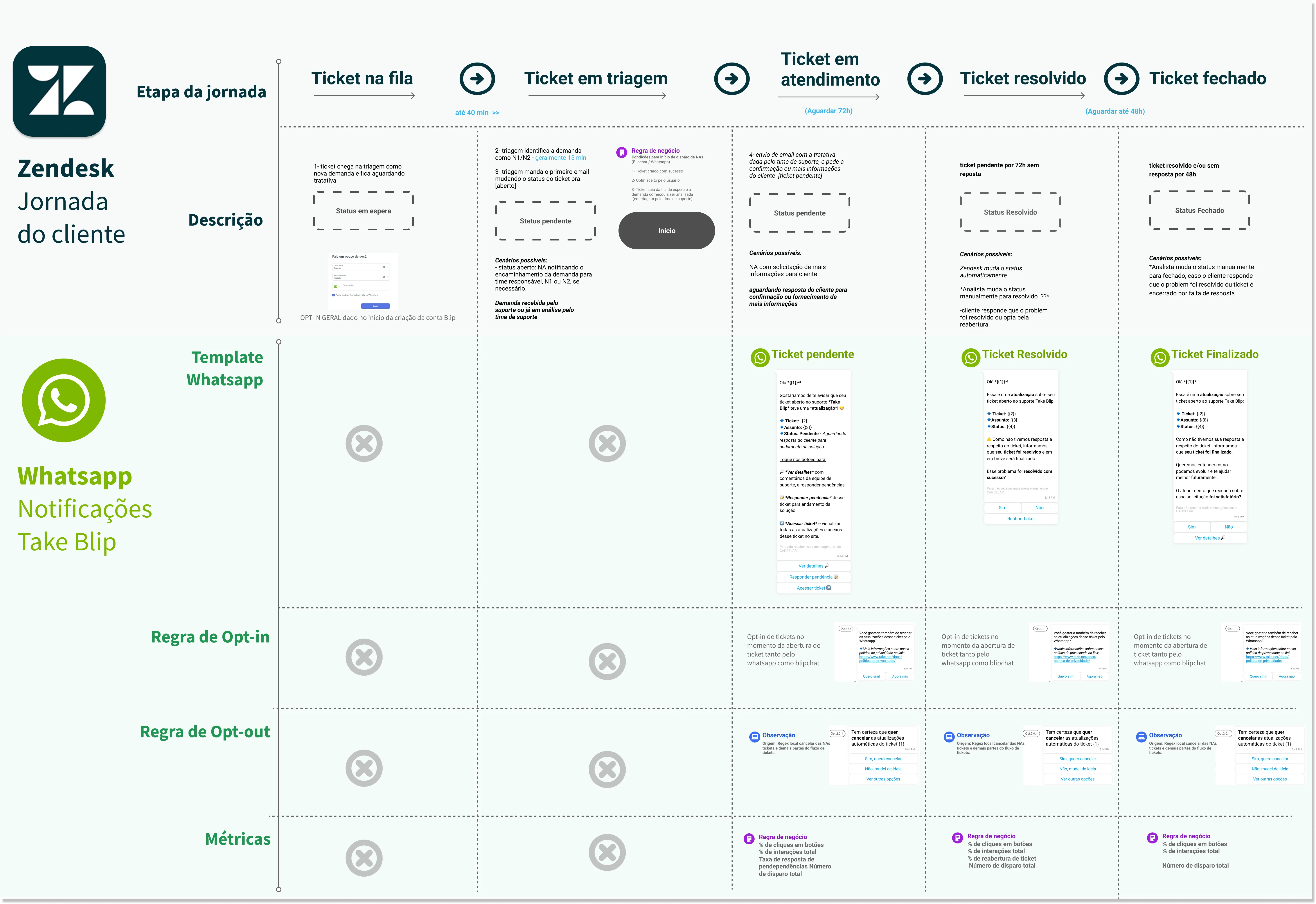
- Used active notifications to keep customers updated on ticket status in real time, attacking the response-time factor discovery flagged as the biggest driver of channel choice.
- Brought support to the customer's preferred channel (omnichannel parity) instead of forcing a webform or email.
An 18-day discovery (5 semi-open interviews, 5 usability tests, 2 journey maps, affinity mapping) surfaced a pre-journey shaping channel choice, that response time was the dominant and deficient factor, that email authentication friction hurt the chatbot path, and that many users didn't know WhatsApp ticketing existed.
The numbers
First response dropped from 68 to 11 minutes, 84% faster for users receiving ticket-update notifications.
FAQ, before and after GPT
| Metric | 1st quarter · no GPT | 4th quarter · GPT consolidated | Δ |
|---|---|---|---|
| Active users | 1.5K | 1.7K | +14% |
| Engaged users | 1.4K | 1.5K | +9% |
| Recurrence | 6% | 8.25% | +2.25 p.p. |
| FAQ questions | 1.7K | 5.5K | +221.7% |
| Resolution rate | 7% | 32.6% | +365.7% |
Resolution time by channel
- Web68.84%
- Email24.57%
- Contato Inteligente6.58%
Even at low volume share, Contato Inteligente posted the best resolution time of all channels: 28h54m annual, versus Email 29h6m and Web 31h54m. In Q4 its resolution time fell a further 25%, to 23h48m.
First response fell from 68 to 11 minutes; the GPT layer saved R$90,200 on resolved tickets; CSAT rose 24%, average resolution 25% faster, recurrence +10%. The dynamic FAQ + AI layer drove a large jump in self-service resolution.
Two stages, one surface
Onboarding help and support started as separate surfaces. The systems decision was tounify them inside the platform as a copilot-style widget: a "have a question?" entry point where the user talks to the AI and, when it's genuinely complex, opens a ticket and gets a human. That's the payoff of the reframe: two lifecycle stages, one surface, one conversational layer. The clearest evidence of the altitude, I wasn't designing three chatbots, I was shaping how help works across the product.
Seen end to end, this is the convergence node on the lifecycle spineabove, made real.
From conversational design to generative AI
What unifies the three pillars is one conversational layer: omnichannel, delivered through native channel components and the in-product widget, and wired to the CRM. On top of that shared layer, the intelligence evolved across the funnel: acquisition ran on rule-based conversational design (intent matching, keyword disambiguation, NLU routing, business rules); support is where generative AI (GPT-3.5) entered, grounded on curated, auto-synced knowledge, with explicit rules for what it answers, when it hands to a human, and how its tone stays on-brand.
The reusable asset is the conversational + CRM layer; the generative model is the newest capability layered onto it, not the whole story. That progression, designing conversational systems before LLMs, then bringing generative AI in where it earned its place, is the range this case is really about.
One funnel, measured at three points
Cadence engineered to accelerate time-to-first-value; feeds the copilot layer.
Design the system, not the screen
Working the same funnel at three points taught me to design the system, not the screen. The highest-leverage decisions weren't visual, they were architectural (one flow, many surfaces, auto-synced) and definitional (what the AI answers, where a human takes over, which metric each stage is judged on). The clearest proof: onboarding and support could collapse into one copilot instead of two tools, and I'd been designing conversational systems well before the industry had an LLM to reach for. Design the screen and you ship a feature. Design the system, and one method pays off the length of a funnel.